Redtailboa.net  

Welcome to the Redtailboa.net forums.

You are currently viewing our boards as a guest which gives you limited access to view most discussions and access our other features. By joining our free community you will have access to post topics, communicate privately with other members (PM), respond to polls, free photo gallery (10 meg upload limit), free classifieds, upload content and access many other special features. Registration is fast, simple and absolutely free so please, join our community today!

If you have any problems with the registration process or your account login, please contact contact us.

Go Back   Redtailboa.net > Caresheets/Articles > Caresheets > Snake
Register FAQ Members List Calendar Arcade Search Today's Posts Mark Forums Read

Advertisement
mist_king  
 

» Site Navigation
» Home
 > Chat!
» Recent Threads
The girls after 2nd shed
Last post by Aaron_NSBM
Today 01:53 AM
9 Comments, 10 Views
Two new Leos
Last post by Ophiophilia
Today 01:52 AM
4 Comments, 5 Views
Leucistic lighting?
Last post by Aaron_NSBM
Today 01:51 AM
11 Comments, 71 Views
Peta is unbelievable.
Last post by LukaTisus
Today 01:39 AM
18 Comments, 164 Views
Poseidon our new Boa
Last post by BRBMOMMA
Today 01:36 AM
6 Comments, 44 Views
i love the big head on...
Last post by kellymack515
Today 01:32 AM
5 Comments, 6 Views
Possible future...
Last post by kellymack515
Today 01:28 AM
5 Comments, 11 Views
» Ads

Comment
 
LinkBack Article Tools Display Modes
<!-- google_ad_section_start -->Care of True Red-tail Boas<!-- google_ad_section_end -->
Care of True Red-tail Boas
Published by natas
10-09-2006
Care of True Red-tail Boas

Care of the True Red-Tail Boas
— A.Rentfro
Theory
Boa constrictor c. This discussion is for the benefit of people who are able and willing to see the pattern, color, behavioral and morphological differences between the Red-tails of Suriname, Guyana, Peru and adjacent locales (B. constrictor c.) from the imperator; or Common boa constrictor, even colorful and well-patterned examples of such. Keepers of other boas can also get useful information from studying this guide. If you lack a foundation in the natural history, taxonomy and general care of the Boids a good place to start would be "Reproductive Husbandry of Pythons and Boas", Ross and Marzec. (Recommended resource).
Part One: True Red-Tails
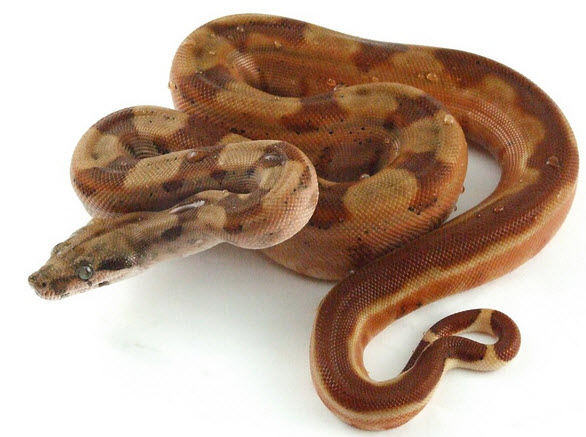
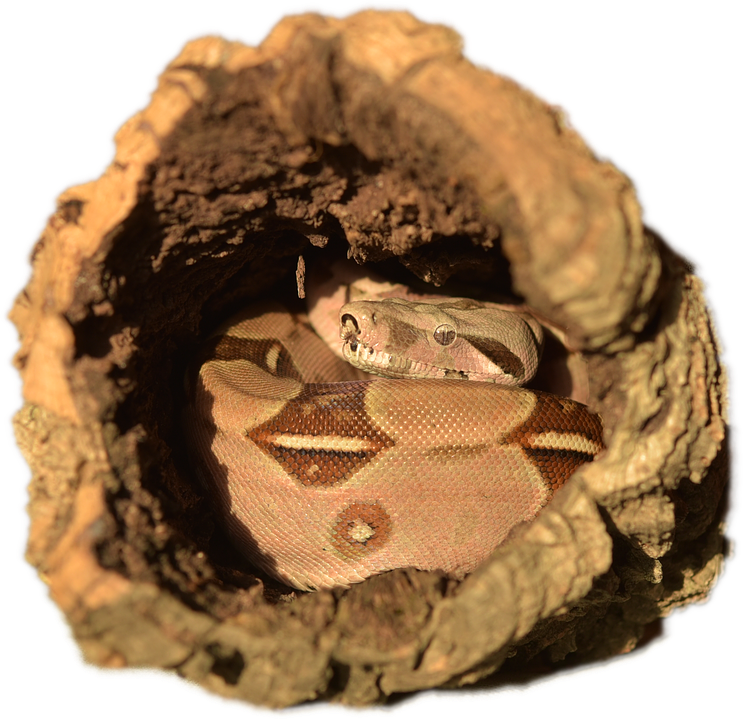
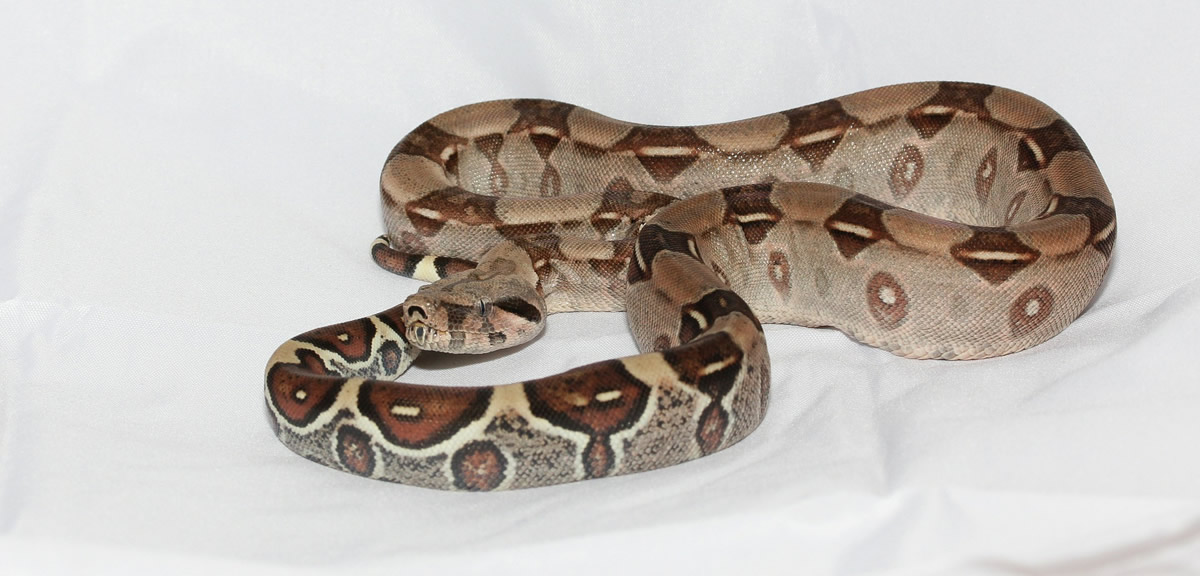
"What do you mean by True red-tails?" If you are unsure about the differences between the true redtails and the more commonly kept and bred imperator subspecies of most of Colombia and all of Central America and Mexico, get out the books and the maps. Closely study the features of the boas you see as well as the geographic realities responsible for the variation and sub-speciation among the Boa. Visit the collections of reputable breeders and keepers and closely study their animals. Bright colors or unusual patterns alone do not a red-tail make. The combination of sharpness of detail, intensity of color, dorsal and ventral pattern elements and quantity of elements, body shape and head definition of a red-tail cannot be found in a Common boa. I have common boas and I enjoy them immensely. I do not mistake them for red-tails and only rarely fail to see the traits of the common boa in an inter-grade.
Often, as a keeper you will also discover that red-tails will generally be more demanding captives. Cage temperatures are more critical and stress is also more of a concern. Red-tails can be more susceptible to digestive disorders and other ailments. Frequently, they are intolerant of overfeeding and will on average grow and mature more slowly. They can be the biggest of boas but will have smaller litters (of larger young). Don't be discouraged; the competent keeper who knows how to keep red-tails will avoid most problems. And, more captive produced red-tails are now in the market, these babies are more adaptive and easier to keep.
"Then, why is there any confusion over what is or is not a Red-Tail?" At some point almost anyone can be confused on this subject. In recent times thousands of Common boas, including some very nice ones too, have been sold to entry-level collectors as red-tails. They commanded a higher price sold as red-tails than as Common boas. In addition the recent focus on unusual 'not from nature' morphs has resulted in many inter-grade boas in the trade. The 'living-art' proponents of focused inbreeding and no-rules crossbreeding began with the common boas, there were more of them and they are easier to breed. But in their zeal to import the patterns and colors of the red-tails (and other subspecies) into their projects they create a lot of inter-grades, inevitably the extras are then put into the trade where very many are ultimately sold as real red-tail boas. Frequently (though not always) these intergrade products will display undersized heads, relatively un-patterned ventrals and a more rounded body-morph. Look for these traits in animals before you buy if you are wanting a pure red-tail boa.
Part two: Acquiring Red-tails
"How do I know which animals will do best?" Start with the best stock you can find. Carefully examine the young for kinks, swellings, abrasions, hydro-cephalism, poor muscular control, slick or sticky texture, mites, nasal discharge and even bad smells. Also avoid boas that appear dehydrated or skinny as well any that are overweight or bloated. If you find any of the above in the snake you are looking at just walk away! The importance of getting the best animals available for what you want to achieve cannot be overemphasized. Read this carefully; the bottom line is PERFECTLY HEALTHY ANIMALS ARE THE MINIMUM REQUIREMENT. Everything else, such as; 'It is tame' or 'one of a kind' or 'it needs a good owner', even price, is just salesmanship. Period... When you decide to 'rescue' a stressed, skinny, mite-infested or ill boa you are telling the irresponsible seller it is ok to treat animals in such a way.
An important note on respiratory distress and other disease in red-tails: Recurring respiratory-distress syndrome in Boa, particularly in the true red-tails, is very likely a fatal condition. It may take three months or three years to kill the animal but it is terminal. Any red-tail which does not quickly respond to recommended treatments for respiratory illness and recover completely with no sign of recurrence should be isolated and considered lost (not sold or traded). If not you risk spreading the disorder and/or producing more boas that are susceptible to or carry a resistant contagion. Sellers often say they have 'cleaned up' an animal with respiratory problems or given a prophylactic cocktail of antibiotics and paraciticides to imports or ill animals. This does not address the fact that the animal has shown symptoms and problems that are undesirable and potentially still a big problem. Long-term observation of many of these cleaned-up animals suggests a shorter life span; reduced reproductive success and offspring more likely to have problems. Poor quality true redtails (imports or abused captives) are not an appropriate choice for keepers without a high level of experience and competence with Boa.
Part three: Raising Red-tails
"Don't try to tell me how to raise boas!" Yes, very many people raise boas to maturity and beyond to a long life span. However, here we are talking about nurturing true red-Tails and especially to the specific goal of long-term captive reproduction.
As was mentioned in Part one, red-tails can require different treatment but caging is pretty much standard. Any secure cage of adequate size to allow movement will do. Ventilation, ease of maintenance and cleaning and the absence of ways for the snake to suffer an injury are priorities. In my opinion and observation fish-tanks, plywood knock-ups, wire enclosures and newspaper substrate are items to be avoided in the proper care of redtails. Here's my best advice on caging for boas.
For small boas up to about 3-1/2 feet use the appropriate-sized Rubbermaid (or equivalent) container. If you don't have a snug rack for these boxes, weight or otherwise secure the lid evenly. Use clean, dry aspen, or another dustless, non-aromatic (!very important!) wood product for a substrate, at least an inch deep. The substrate should pack-down at to some extent, not just float around the cage. If it won't settle down consider another brand. Put a solid hide-box, such as an overturned clay dish with a notch cut out, in cages with animals up to about 3-1/2 feet in length. Larger boas like some privacy too, cover part of the front of the cage. Never use hide-boxes with gravid females of any size! Equip the cage with a 3 or 4" water dish for neonates. Red-tails up to 4 or 5 feet in length use a 6" dish. Large adults can get a water bowl 8 or 10" in diameter.
"But water bowls of those sizes aren't big enough for my boas to soak in!" You're right! Boas and other snakes do seem to sometimes enjoy a bath. The reality is many times they are seeking security, escape from temperature extremes or relief from mites or other parasites. And sitting for periods in the water dish is a main cause of illness and death in Boa, especially small ones. Bacterium and other contagion are carried into the dish by the animal and quickly multiply in the water and are then ingested or can simply cause skin disorders. Regularly supplying a soaking-pool for Boa is unneeded and risky.
The priorities in caging are your animal's health and safety. All other concerns are secondary. If you have one or two adult redtails and the time to micromanage their enclosures almost any cage will do. However large red-tails do very well in professionally made unitized enclosures and maintenance is much reduced in these cages. Several types of manufactured cages perform well. If you want to build your own caging carefully consider the attributes of a top-quality manufactured cage before you begin and see if you can incorporate them in your project. Whatever type of cages you use they should be large enough for the animal to move freely and not be cramped. The most useful calculation I've seen for sizing caging for big boas is to have the diagonal (floor) measurement of the cage be about the same or longer than the length of the boa. This can be fudged some, many big Boa seem very happy in somewhat small quarters. The habits of boas change from being foragers when young to ambush-predators as adults. As a result larger boas will normally use a smaller percentage of their time crawling. Equip your cages with litter dams and use a good-quality wood product for substrate.
About cage substrate: Many people have done well with newsprint or another featureless product as substrate. After closely observing captive Boa for over thirty years I myself believe that behavioral problems, temperament and health issues, breeding failures and even appearance-flaws could be alleviated by switching to a good quality wood product as cage substrate. Newsprint may even promote poor condition or obesity. Many larger boas feel insecure crawling on a slick or featureless surface and so will instead coil in a corner or against a branch or hide-box for prolonged periods. Boas are complex in ways we cannot easily see. This includes behaviors. A semi-permanent substrate such as aspen shavings allows them a home-range of sorts, they feel more secure and move about the enclosure with more confidence. Mother boas build nests in the substrate and deposit the young there. If allowed to do so the female will guard and oversee the newborns while they rest and develop for many hours or even days before crawling away with yolks completely absorbed and no bleeding or umbilical problems. There is an observed positive difference in young allowed to develop without interference and it may include a better temperament.
Of course if you are one of the people who cannot control the ingress or recurrence of mites in your facilities you cannot use a wood-product substrate in your caging.
"What are the most important things in raising Red-tails?" Temperature, temperature cycles and feeding. Start right away giving your red-tails daytime and nighttime as well as a Summer and Winter. There is some question over why this is needed. These animals come from very near the equator relative to here in the United States (or Europe). They experience only a fraction of the seasonal changes we do. Much of their climatic variation is defined by rainfall patterns or the presence (or absence) of tropical weather systems. Perhaps in their microhabitats there is substantial change in photoperiod and mean temperature. We don't really know all the answers. We do know that following a program of seasonal change in captivity works. Aiding in the proper development of true red-tails. And also is very helpful for repeated reproductive success.
Good Temperature Guides for growing boas:
"Summer" March thru September. 12 to 13 hours of Daylight, the remainder dark. Daytime high temperatures around 90 deg (f). Nighttime lows 75-80 deg (f).
"Winter" October thru February. 10 hours of Daytime. High temps 85 deg (f) Nighttime lows to about 74 deg (f).
The best way to achieve this is to place your lights on a timer and adjust the light period accordingly. Temperature is easily manipulated by keeping the room at a comfortable temp for you (70-84deg, corresponding to the period) and then place a heat strip under one end of the cage adjusted to a few degrees higher than the daytime high or nighttime low you are aiming for. The strip should not be much bigger than the space the young snake occupies in the cage. An example for a daytime Summer set-up would be an 80-84deg room with a heat-strip adjusted to 95. This allows for the animal to seek an optimum temperature, rather than you deciding what is best. Professional thermostatically controlled heating works very well. Be advised that body temps below about 64deg (f) and above about 95deg (f) are potentially harmful to many boas, including red-tails. Temperature manipulation for breeding is further discussed in the Breeding section of this site.
Heat lamps, spot lamps and infrared emitters are not recommended. Boas thermoregulate in subtle ways by raising and lowering the mass of their bodies on a heated surface; this is largely denied to them by using radiant heat. In addition lamps and other similar devices drive moisture from the cage and it's contents, making humidity control much more difficult. Humidity is a factor in proper care of Boa c. ssp.. 60% or more (non-condensing) is normally recommended. Humidity also plays a role in seasonality. In the northern hemisphere we experience a drop in humidity in Winter, especially indoors, this apparently is not objectionable. Misting or raining on Boa may or may not be needed or useful in cycling boas. Its function is most likely to improve or prolong the chemical traces (pheromones) that key males to the breeding condition of mature females. We do not employ this here but rarely experience extremely low humidity levels.
"How often do I feed my boas?" Inexplicably, there still exists a lot of confusion about how much and how often snakes should be fed. Feed a growing red-tail as often as it will take food but wait until all signs of the previous feeding have gone. In other words, don't feed it if it is still bloated with the last meal. Depending upon the temperature cycle it is in and the size of the prey item this can take from 6-15 days. If unsure, wait another day or two. It is a practical impossibility to underfeed a normal healthy boa kept in the proper conditions. Many people find it entirely effortless to overfeed theirs! The single most frequently identifiable factor in premature death, poor fertility and other problems with captive boa, especially red-tails, is obesity resulting from over feeding.
"How big a meal is right for my boa?" If the food item is not big enough to make a noticeable lump in the snake, feed something larger. If your snake is unable to crawl or coil normally because of the size of it's distended belly after feeding, you have fed a meal too large. Generally, the diameter of your boa at the widest part of the body is about the same as the largest meal you should offer. But no rule is applicable to all animals at all times. An obvious exception to this simple size rule would be a gravid female bloated with babies, if it were to be fed a gigantic meal as large as it's distended body pre-mature birth or even death might result. There are other exceptions. No rule, guide or schedule is anything other than a starting point. You have to observe your animals and apply what you learn to their care.
"Do I feed my growing Red-tail more in Summer and less in Winter?" If you closely consider the above information, you will see that it is self-adjusting to most all changes in the snake's environment and condition.
Overfeeding, feeding too frequently and feeding prey items too large can often sicken or even kill a red-tail. As will excessively high or low temps during digestion. Apparently a cycle of overfeeding sets up a condition of sensitivity or imbalance in the boa's digestive tract. Contents from the lower digestive tract may also get into the stomach during movement or handling if the meals are too large or too frequent. Regurgitation exacerbates this condition. It has also been suggested that sensitivity to domestic rodent hair sometimes develops in red-tails. The first sign of either of these conditions is usually regurgitation but can also be listlessness, refusal of food, restlessness or any combination of those symptoms. In addition to the risk of sickness or death, overfed, power-fed and overweight adult red-tails have repeatedly shown diminished breeding behavior and fertility. Properly conditioned animals are a must for breeding. I need also say that firm muscular red-tails and other boas demonstrating varied scale sizes, textures and iridescence are objects of splendid beauty far more wonderful than the simple spectacle of a huge fat boa.
"How long will it take for my Red-tails to mature?" Three and one-half to six years if you use the guide outlined above. Subspecies is a factor as is also locality of origin.
"What will be the mature size of my red-tail?" Size in Boa is a result of genetics and husbandry. In captivity husbandry is the dominant factor. Any Boa kept in an eternal Summer condition with frequent feedings of high-quality, high-fat foods will exceed it's average normal size potential both in length and mass. It is also known that rapid growth and excess weight in developing red-tails predisposes them to poor reproductive success as adults. Age is the primary factor in sexual maturity in Boa constrictor ssp., not size or weight. Note that maturity is properly defined as the ability to produce viable young without complication, not simply breeding and making slugs or a few young. As a reference only here are the minimum length and mass observations of female boa successfully breeding here at Rio Bravo Reptiles. Weights were taken as close to ovulation as was practical. I hope this table of information gives you some hint as to the extent of the genetic and behavioral variation in Boa c. ssp.!
Common Colombian boa.. 1.6 meters, 4.5KG
Suriname redtail 1.9 meters, 4.4KG
Brazil redtail 1.8 meters, 4.5KG
Venezuela redtail.. 1.6 meters, 4.9KG
Can Cun, Mexico boa.. 1.3 meters 2.9KG
Hog Is. boa.. 1.2 meters, 2.4KG
Sonora desert boa.. 1.5 meters, 2.7KG
Tarahumara boa.. .95 meters, 1.6KG
Corn island boa.. 1.1 meters, 2.1KG
Caulker cay boa.. 1.0 meter, 2.2KG
Longicauda.. 1.8 meters, 3.8KG
Peru Redtail (Iquitos) 1.9 meters, 4.9KG
Peru Redtail (Pucallpa) 1.7 meters , 4.6KG
Argentine Occidentalis 1.9 meters, 5.4KG
Paraguanera, Venezuela boa.. 1.1 meters, 2.2KG
Mainland Nicaragua boa.. 1.1 meters, 1.9KG
*Acrantophis dumerili.. 1.6 meters, 4.4KG
This article is property of Gus Rentfro and Welcome Rio Bravo Reptiles
Copyright 2005 Gus Rentfro / Rio Bravo Reptiles

Article Tools

Add Post to del.icio.usFurl this Post!
  #1 (permalink)  
Leadprincess on 11-21-2006, 06:25 PM
Are boas sensitive to loud noises like music?
Add Post to del.icio.usFurl this Post!
Reply With Quote
  #2 (permalink)  
nokino on 01-06-2008, 12:38 PM
Re: Care of True Red-tail Boas

I totally agree! Some breeders have muddied up the boas of today. I see common Boas without any color on the tails selling for $199.00. In 93 when I got out of the ARMY a pet store had been keeping my large boa that I traded for a $129.00 boa with as close to a true red tail colorization. I don't see them anymore.
I have wanted a Suri for 30 yrs and finally found a Gem that didn't break me. I am happy to know that my pet that has a long life span is amazing to everyone who sees him. I can't believe I finally found one.
If I could only find a Female BCC as nice or at all any where close It would be worth the travel time or shipping. Only if they breed otherwise it would be dissapointing in the least. Hope you have a great year.

NOKINO

Boaman1968@aol.com
Add Post to del.icio.usFurl this Post!
Reply With Quote
  #3 (permalink)  
BIG WIL on 01-17-2008, 06:16 PM
Re: Care of True Red-tail Boas

is it going to hurt my boa to live it's first year in a 40gal critter cage "glass"
Add Post to del.icio.usFurl this Post!
Reply With Quote
Comment


Currently Active Users Viewing This Article: 1 (0 members and 1 guests)
 
Article Tools
Display Modes

Posting Rules
You may not post new articles
You may not post comments
You may not post attachments
You may not edit your posts

vB code is On
Smilies are On
[IMG] code is On
HTML code is On
Trackbacks are On
Pingbacks are On
Refbacks are On

Points Per Thread View: 1.00
Points Per Thread: 15.00
Points Per Reply: 5.00

Similar Threads
Article Article Starter Category Comments Last Post
How much can be known from a boas tail? Reptilia Boas 1 10-08-2006 02:50 AM
Is it true that Columbians cannot be TRUE RED TAIL BOAS? RealDeal24 Boas 6 09-26-2006 06:32 AM
How can you tell if its a true red tail? RealDeal24 Boas 4 09-22-2006 01:42 PM
I need opinions on this care sheet I wrote for people who buy my boas Dbutton Caresheets/Articles/Interviews 18 02-20-2005 09:05 PM
True Red Tail Boa versus Red Tail Interpreter Mikie'02' Just Talk 5 04-29-2004 12:54 AM

Powered by vBadvanced CMPS v2.2.0

All times are GMT +1. The time now is 01:54 AM.


Tenant Loans | Loans | Auto Loan | Homeowner Loans | Free RSS Reader
Powered by vBulletin® Version 3.6.10
Copyright ©2000 - 2008, Jelsoft Enterprises Ltd.
Search Engine Optimization by vBSEO 3.0.0 RC6
Copyright 2000-2004 Redtailboa.net. The comments are property of their posters,
Article powered by GARS 2.0.0 ©2005-2006
Redtailboa.net Top Herp Sites
[Output: 92.18 Kb. compressed to 84.72 Kb. by saving 7.47 Kb. (8.10%)]